How Much Does a Good Website Cost? An Honest Answer Without the Fluff
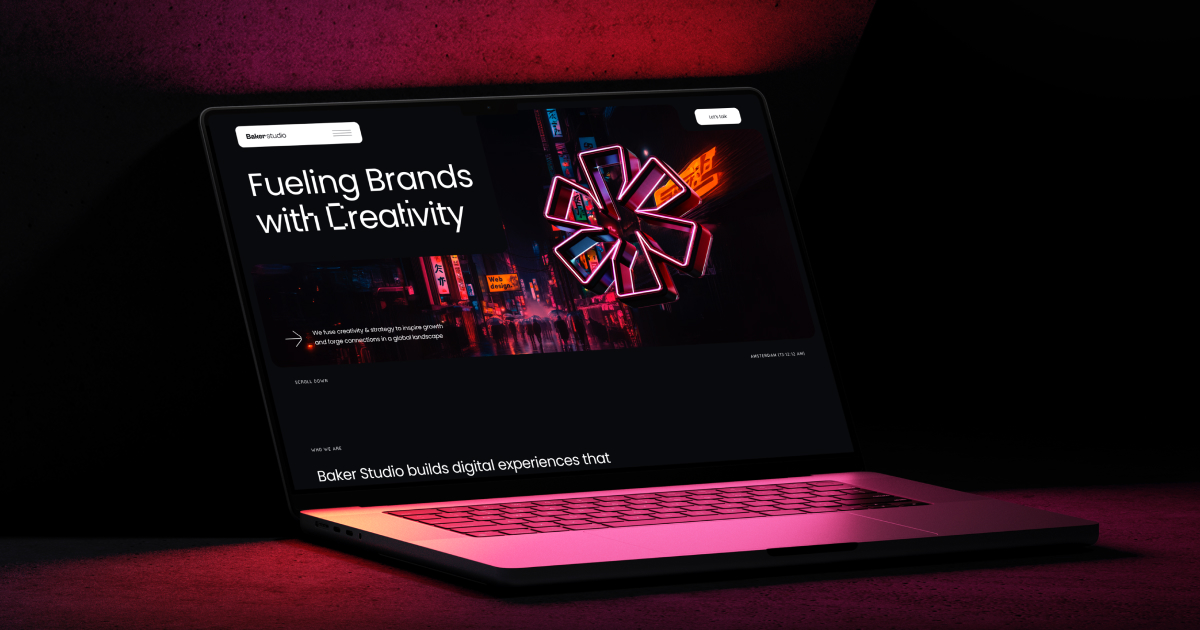
This question comes up in every first conversation. And we understand why – quotes on the market range from a few hundred to a few hundred thousand dollars, and the client has no idea why or what they are actually buying.
Instead of beating around the bush, we will give you the tools to evaluate any quote – whether you end up working with us or with another agency. Before we get to numbers, it is worth understanding one thing: the price of a site is a function of the process behind it. An agency that does not distinguish between UX and UI and treats them as one will give you a different product and a different price than one that runs a full research process.
Why Is the Range So Wide?
Because “a website” is a concept as broad as “a car”. A Fiat Seicento and a Porsche 911 are both cars – you buy them in different places, with different expectations and for different purposes.
With websites this obviousness is not so obvious – because from the outside two sites can look similar, while completely different processes, competencies and business outcomes hide behind them. A site that just “looks good” is something else than a site that actually sells.
What Do You Get for $400 to $1,500?
Usually a template. A ready WordPress theme or a Wix site with minimal personalization.
What does that mean in practice? No UX research. No strategy. One designer or freelancer does everything. The project takes one to two weeks.
Such a site works. It exists. It looks decent. But it is optimized for speed of execution, not for results. You will not know if it converts, because nobody thought about conversion when designing it. The effect is similar to what we describe in our article on why a template destroys your brand – visual chaos instead of a coherent communication system.
What Do You Get for $2,500 to $7,500?
This is where designing starts, not just “making a site”.
For this money you should get: wireframes and information architecture, a unique UI design, at least basic research on the target group, a site built on WordPress with a custom theme, speed optimization and basic technical SEO.
In this range you can also expect post-launch support and CMS training.
Red flag: if for $4,000 the agency jumps straight to visual design without wireframes and conversations about your clients, you are buying expensive UI without UX.
What Do You Get for $7,500 to $25,000?
A comprehensive project for a company for which the website is a key sales or image tool.
In this price range you should expect: a full UX process, a unique UI design system with full documentation, the site built on the target technology, testing across devices and browsers, analytics implementation and tools to measure conversion, post-launch support for at least 3 months.
Companies in this range treat the site as an investment with expected ROI. How design at this level translates into a competitive advantage is described in our article on how design becomes a competitive advantage – including McKinsey data.
What Affects the Price?
Functional complexity – a landing page is different money than an extensive service with a product configurator and CRM integrations.
Number of subpages – every subpage is additional design, content and optimization.
External integrations – CRM, payment systems, ERP, partner APIs. Every integration is additional development hours.
Scope of research and strategy – agencies that do a full UX research are more expensive. But their projects convert better.
Number of specialists – a different price when one freelancer does everything, a different one when a whole team works on it.
Where Is Money Most Often Lost?
On redesigning. The client picks the cheapest option, gets a site that does not meet business goals, and reinvests after a year. The total cost is always higher.
On an unfinished site. Many companies spend money on design and implementation, then run out of budget for content. The effect: a beautiful site with placeholder texts. Google and clients see that.
On lack of analytics. A site without configured analytics is a car without a dashboard. You do not know what is working, so you cannot improve it. We describe how to diagnose conversion problems in our article on why a website loses customers in the first 3 seconds.
How to Think About This Budget?
Not as a cost, but as an investment with expected return.
Calculate this before talking to an agency: how many leads per month does your current site generate? How much is one lead worth in your industry? How much will monthly revenue grow if the site starts generating 2x more leads?
An agency that asks about your business goals before quoting a price is a partner. An agency that starts with “what is your budget?” is a contractor. We cover how to tell a good agency from a bad one in our article on how to choose a branding or web agency – 8 questions worth asking before signing a contract.
It is also worth distinguishing one-off costs from long-term costs. Companies that invested in rebranding or identity change at the same time as the website often achieve better results, because the two investments reinforce each other.
Honest Summary
A cheap website is not bad – as long as you understand what you are buying and what you are not buying. The problem appears when a client pays $1,000 and expects results that require an investment ten times higher.
An expensive website is not a quality guarantee. It is worth spending time talking to several agencies, looking at their actual projects and asking how they measure success.
DotLineCode quotes projects after a conversation about business goals – not after counting subpages. If we do not know how much a conversion is worth in your industry, we cannot price the project honestly.